Meditation for Corporate Burnout: How a Panic Attack Became My Wake-Up Call
A tech executive's panic attack during a board meeting led him to discover urban meditation. How mindfulness helped me recover from corporate burnout without quitting my job.
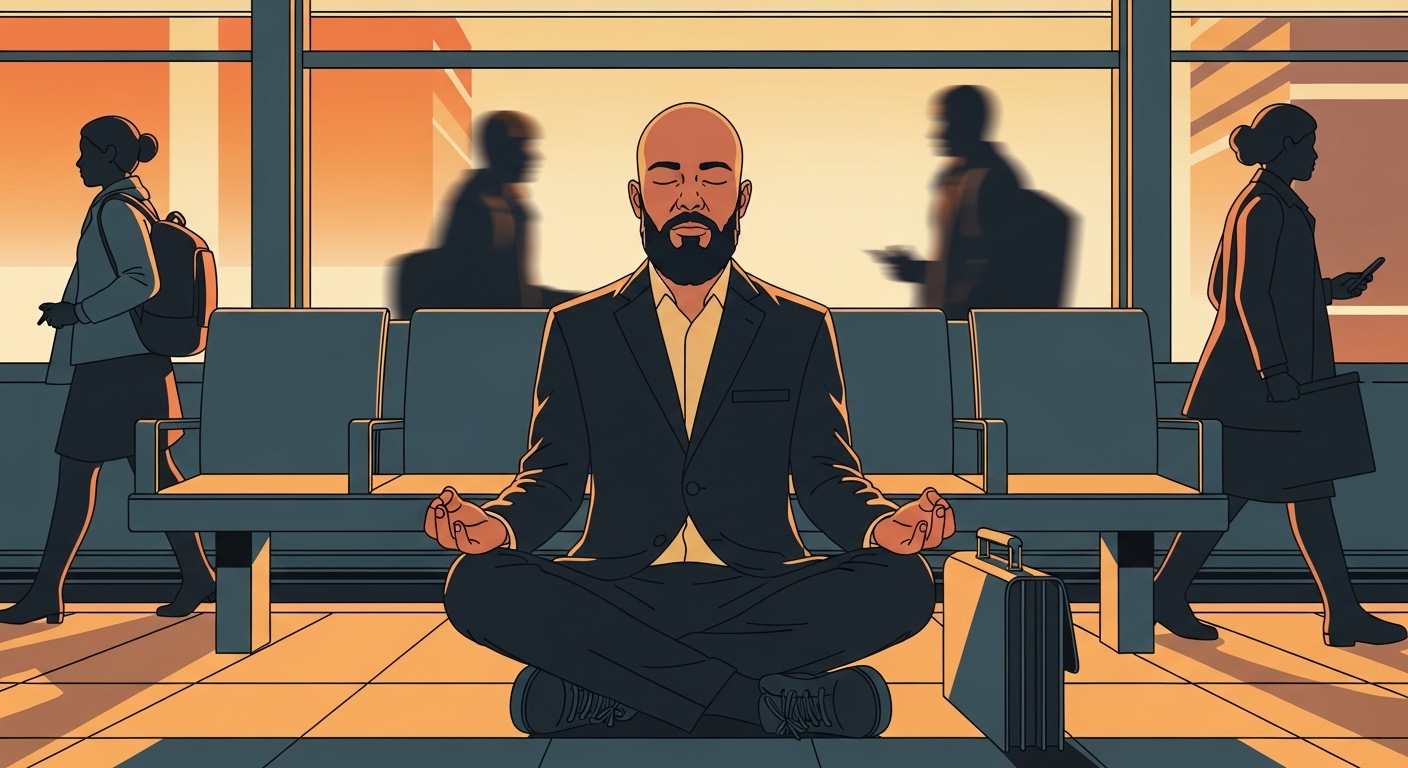
Two years ago, I was drowning in success.
Corner office. Six screens. Stock options that made my accountant giddy.
By every metric that mattered in Silicon Valley, I was winning. By the only metric that actually matters—feeling alive—I was flatling.
The wake-up call came mid-PowerPoint, middle of a board presentation about Q3 projections. Suddenly, I couldn’t breathe. The room spun. Faces blurred.
And as I gripped the conference table, trying not to collapse in front of twelve executives, I had a moment of crystal clarity: I had optimized everything in my life except my actual experience of living it.
That panic attack became my teacher.
The Myth of the Meditation Retreat
Here’s what nobody tells you about traditional meditation: it’s designed for people who don’t have your life.
Sit quietly for 30 minutes? My calendar is scheduled in 15-minute increments.
Find a peaceful space? I work in an open office that sounds like a stock exchange floor.
Empty your mind? Mine is running continuous calculations on deadline dependencies and resource allocation.
The meditation industrial complex wants you to believe that peace requires perfect conditions. That enlightenment means escaping to a mountain. That you need apps, cushions, retreats, and most importantly—time you don’t have.
They’re wrong.
The City as Monastery
After my boardroom breakdown, I didn’t quit my job and move to Tibet. I stayed right here, in the beautiful chaos of modern life.
But I started seeing it differently.
What if the city itself could be a monastery?
What if every elevator ride could be a vertical meditation?
What if traffic lights were teachers of patience?
What if notification sounds were mindfulness bells?
I discovered that the urban jungle doesn’t prevent spiritual practice—it provides the perfect training ground for it.
The noise, the pressure, the constant demands—they’re not obstacles to awakening. They’re the path itself.
Next in this series: Discover the practice of Sacred Intervals—how to find peace in the moments you already have, without adding anything to your schedule.
About Marcus Wu
Urban Spiritual Teacher & Mindfulness Practitioner
Marcus Wu is an urban spiritual teacher, former tech executive, and creator of Sacred Intervals. He has been teaching meditation for over 5 years, mostly to people who work in fast-paced, high-pressure jobs and need practical ways to stay grounded.
You might also enjoy
Urban Meditation Stories: Finding Stillness in the City
The city is not the enemy of meditation. It's the dojo. Marcus Wu's urban meditation stories turn subways, offices, and crowded streets into places for practice.
Urban Meditation: Why the City Is the Best Place to Practice Mindfulness
Urban meditation isn't a compromise — it's an advantage. How city noise, crowds, and daily routines become the foundation for a mindfulness practice that actually sticks.
Meditation Stories for Work Stress: The Corporate Monk's Guide
Marcus Wu had a panic attack during a board presentation. He didn't quit his job — he changed how he showed up. These meditation stories are for people who can't 'just relax.'