Meditation Stories for Beginners: Why Stories Make Meditation Easier
Tried meditation and quit? You're not broken — the format was. Meditation stories give beginners something to follow, removing the pressure to 'empty your mind.' Here's how to start.

You don’t need to sit cross-legged. You don’t need to empty your mind. You definitely don’t need another app with a streak counter that makes you feel bad about yourself.
What you might need is a story.
That sounds strange if you’ve been told meditation is about silence, stillness, and blank mental space. But stories are the oldest meditation technology humans have. Long before anyone sat on a cushion in a quiet room, people gathered around fires and listened. The storyteller’s voice would slow their breathing. The images in the tale would pull their attention out of the day’s worries and into something vivid and present. Their bodies would relax without being told to. Their minds would settle without being forced.
Oral traditions, parables, guided visualizations passed down through centuries. These were trance technologies. They worked because the human brain doesn’t naturally want to think about nothing. It wants to think about something. Give it something worth following, and it’ll quiet down on its own.
The modern meditation industry forgot this. It replaced stories with sessions, characters with calm voices, and narrative pull with streak counters. Then it blamed you when you stopped showing up.
If you’ve tried meditation and quit, the missing ingredient wasn’t willpower or discipline. It was a reason to come back tomorrow. Stories provide that. Here’s how.
Why 92% of People Quit Meditation Apps (And How Stories Fix That)
Here’s a number worth knowing: according to Sensor Tower’s 2023 analysis, only 8% of meditation app users are still active after 30 days. That’s a 92% abandonment rate. Within a month.
We wrote about this problem in detail, but the short version is: most meditation apps ask you to supply your own motivation. Every day you open the app, you’re starting from zero. There’s no thread connecting today’s session to yesterday’s. No reason to come back other than the vague idea that you “should.”
That’s the same motivational structure as flossing. And we all know how that goes.
Stories solve this by replacing discipline with curiosity. When you’re following a character through something real (a panic attack on a subway platform, a moment of unexpected stillness in a grocery store, a 3 AM screen-glow realization), your brain generates its own pull. You don’t need a push notification to remind you. You want to know what happens next.
This isn’t a hack. It’s how human attention has worked for thousands of years. Oral traditions kept people engaged through narrative. Bedtime stories work on the same principle. Religious parables encoded their deepest teachings inside tales for a reason: a mind following a story is a mind that’s present.
The app model says: “Supply your own motivation and we’ll supply the content.” Story-driven meditation says: “We’ll give you a reason to show up, and the mindfulness will happen along the way.”
One of those approaches works for 8% of people. The other works with your brain instead of against it.
What Is Story-Driven Meditation?
Let’s be clear about what this isn’t.
It’s not an audiobook. You’re not passively listening to someone read fiction while you zone out. It’s also not standard guided meditation with a narrative paint job. Not a calm voice saying “breathe in… now notice your shoulders… breathe out…” with some birdsong in the background.
Story-driven meditation is a narrative with mindfulness practices woven into the experience. You follow characters through real situations. The characters encounter presence, struggle, insight, and failure. And as you follow them, you find yourself doing the thing meditation is supposed to teach: paying attention, on purpose, to what’s happening right now. Without the self-conscious pressure of “am I doing this right?”
In a traditional guided session, someone tells you to notice your breath. In story-driven meditation, you’re listening to Marcus Wu standing on a stalled subway car, exhausted, taking three breaths because he’s out of options. And you notice your breath because his moment became yours.
Waylight Stories is built around three characters, each with a different approach to mindfulness, living in an interconnected world:
Marcus Wu is the urban monk. Former tech executive, busy, skeptical, practical. His meditation happens in the gaps between things: elevator rides, phone calls, traffic lights. If you don’t have time and don’t believe in any of this, Marcus is your guy.
Luna Rivers is the organic mystic. She found stillness through touch, soil, living things. Her meditation is sensory and slow. If silence makes you anxious but holding a warm mug makes you calm, Luna makes sense.
Aria Chen is the digital sage. A developer who realized that fighting her screen habit was pointless, so she turned it into her practice. If you spend your life online and every wellness guide makes you feel guilty about it, Aria gets it.
Three people. Three paths. All of them tried traditional meditation and almost quit. Their stories are about what happened when they stopped following the instructions and started paying attention to their actual lives.
The 3 Best Meditation Stories for Beginners
Not sure where to start? Pick the character whose situation sounds most like yours.
Marcus Wu — Sacred Intervals
Best for: Busy people, skeptics, anyone who “doesn’t have time”
Marcus’s sacred intervals practice is built for people who will never have a 30-minute meditation block, and know it. The whole thing is based on micro-moments you already have: the pause before answering your phone, the breath before walking into a meeting, the few seconds while an elevator climbs between floors.
It works for beginners because it asks almost nothing of you. No equipment. No special time carved out. No sitting still. You’re just noticing gaps that already exist in your day and using them. Three breaths. That’s the entire practice.
If you’re someone who reads about meditation and thinks “sounds nice, but when?” — start with Marcus.
Luna Rivers — Seed Meditation
Best for: People who find silence uncomfortable, sensory thinkers, anyone drawn to nature
Luna’s seed meditation starts with placing your feet flat on the floor. That’s it. From there, she guides you through a four-step practice rooted in touch, breath, and the imagery of growth. You imagine roots extending from your feet. You place a hand on your chest. You breathe like rain falling on soil.
It works for beginners because the imagery gives your mind something to hold. You’re not staring into blankness. You’re tending a small, imaginary garden inside your chest. The pace is slow and the metaphors are grounding. Literally. If standard meditation makes you feel unmoored, Luna’s approach gives you something to stand on.
If silence makes you restless but you feel calm when you’re touching something real, a warm mug, a stone, a piece of bark, start with Luna.
Aria Chen — Digital Presence
Best for: Screen-dwellers, overthinkers, people who’ve been told to “just unplug”
Aria’s sacred protocols use the technology already in your hands. Her core practice: before unlocking your phone, take three conscious breaths. Not to punish yourself for looking at it. Just to arrive with intention. Every notification becomes a meditation bell. Every browser tab you close becomes a small act of letting go.
It works for beginners because it meets you exactly where you are. If your phone buzzes 50 times a day, that’s 50 opportunities for one conscious breath. No extra time required. No lifestyle overhaul. You’re turning habits you already have into something more deliberate.
If you live online and every meditation guide tells you that’s the problem — start with Aria.
How to Start: A Beginner’s First Week
Here’s a low-pressure framework for your first seven days. No streaks. No scores. No guilt if you skip a day.
Days 1-2: Just listen. Start with Episode 1: Welcome to Waylight. You don’t need to meditate. You don’t need to sit in a special way. Just listen like you’d listen to any podcast. On your commute, while cooking, while walking the dog. The goal is to meet the characters and see whose situation resonates with yours.
Listening is the practice at this point. Seriously. You’re training your attention to follow something with interest. That’s more meditation than staring at a wall while your brain screams.
Days 3-4: Pick your character. By now, one of the three will feel more familiar than the others. Maybe you recognize your own restlessness in Marcus. Maybe Luna’s sensory approach sounds like relief. Maybe Aria’s screen-positive perspective is the first meditation voice that hasn’t made you feel guilty.
Follow that character’s story further. Listen to their episodes. Read their practice posts. You’re not committing to anything. You’re just getting curious.
Days 5-7: Try one practice. Pick one small thing from your character’s approach and actually do it. Marcus’s three-breath elevator pause. Luna’s feet-on-the-floor moment. Aria’s phone-unlock breath. One practice. One time. See what happens.
If it felt like nothing, that’s fine. If it felt like something, also fine. The bar here is absurdly low on purpose. You’re not building a habit yet. You’re running a small experiment on yourself.
If a week passes and you didn’t do any of this, you haven’t failed. You just haven’t started yet. The episodes will still be there.
Meditation Stories vs. Traditional Meditation for Beginners
Not every approach works for every person. Here’s an honest comparison.
| Story-Driven Meditation | Guided Apps (Calm, Headspace) | Silent / Unguided | Group Classes | |
|---|---|---|---|---|
| Best for | Overthinkers, skeptics, app quitters | Self-motivated beginners | Experienced practitioners | People who want community |
| Motivation source | Narrative curiosity | Internal discipline + reminders | Internal discipline | Social accountability |
| Barrier to entry | Low — just listen | Low — download an app | High — no guidance | Medium — find a class, show up |
| Cost | Free (podcast) | $70-100/year | Free | Varies |
| What carries you forward | Characters and plot | Streak counters and courses | Personal commitment | Other people |
Story-driven meditation is for people who’ve tried the guided app route and found themselves in that 92%. Overthinkers who need something to follow. Skeptics who find calm instructors alienating. Busy people who won’t carve out special time.
Where it’s not the best fit: if you’re an experienced meditator looking for deep silent practice, story-driven meditation probably isn’t your primary tool. If you already have a strong seated practice and want to go further into vipassana or zazen, you’re past the problem stories solve. Stories are a door, not the whole house.
We wrote a more detailed comparison of story-driven meditation vs. apps if you want the full breakdown.
Your Next Step
If any of this sounded like it was written for you, here’s where to go.
Episode 1: Welcome to Waylight is the starting point. Fifteen minutes. Three characters. Zero pressure. Available on Spotify, Apple Podcasts, or wherever you listen to podcasts.
If you want to explore the characters and practices first, the meditation stories hub has the full overview.
If you want a broader look at different ways to start meditating, including approaches that have nothing to do with us, we put together a beginner’s guide and a more detailed guide page covering multiple paths.
We’re not going to tell you this is the only way to meditate. We’re just going to point out that you’ve probably already tried the “sit still and breathe” way, and you’re here reading this instead of doing that. So maybe try something different. A story. A character. A reason to come back that isn’t guilt.
Your brain has been following stories since before you could read. It’s good at it. Let it do what it does.
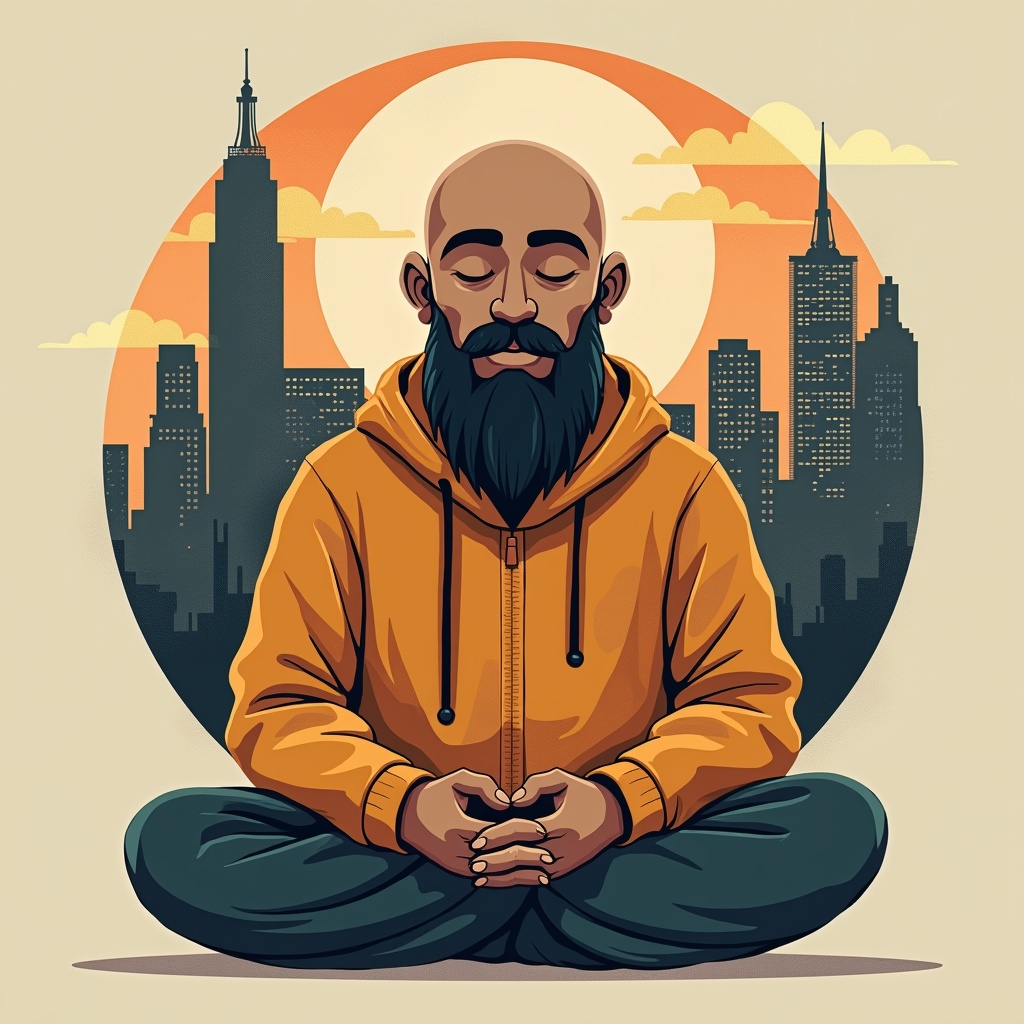
About Marcus Wu
Urban Spiritual Teacher & Mindfulness Practitioner
Marcus Wu is an urban spiritual teacher, former tech executive, and creator of Sacred Intervals. He has been teaching meditation for over 5 years, mostly to people who work in fast-paced, high-pressure jobs and need practical ways to stay grounded.
You might also enjoy
Meditation for Beginners: An Honest Guide from Three People Who Almost Quit
Starting meditation is hard. Three meditation teachers share what actually worked when they were beginners — and why most beginner advice makes things worse.
Why Your Brain Remembers Stories but Forgets Meditation Apps
92% of people abandon meditation apps within a month. The problem isn't willpower — it's format. Here's what neuroscience says about why stories stick and sessions don't.
Guided Meditation Stories vs. Traditional Meditation: What Actually Works?
Silent meditation, guided instructions, or story-driven practice — which format actually works? An honest comparison of three meditation approaches, and how to pick the right one for your brain.