5-Minute Meditation: Four Quick Practices for People with No Time
No time to meditate? These four 5-minute meditation techniques fit into your commute, lunch break, or the gap between meetings. Practical mindfulness for packed schedules.
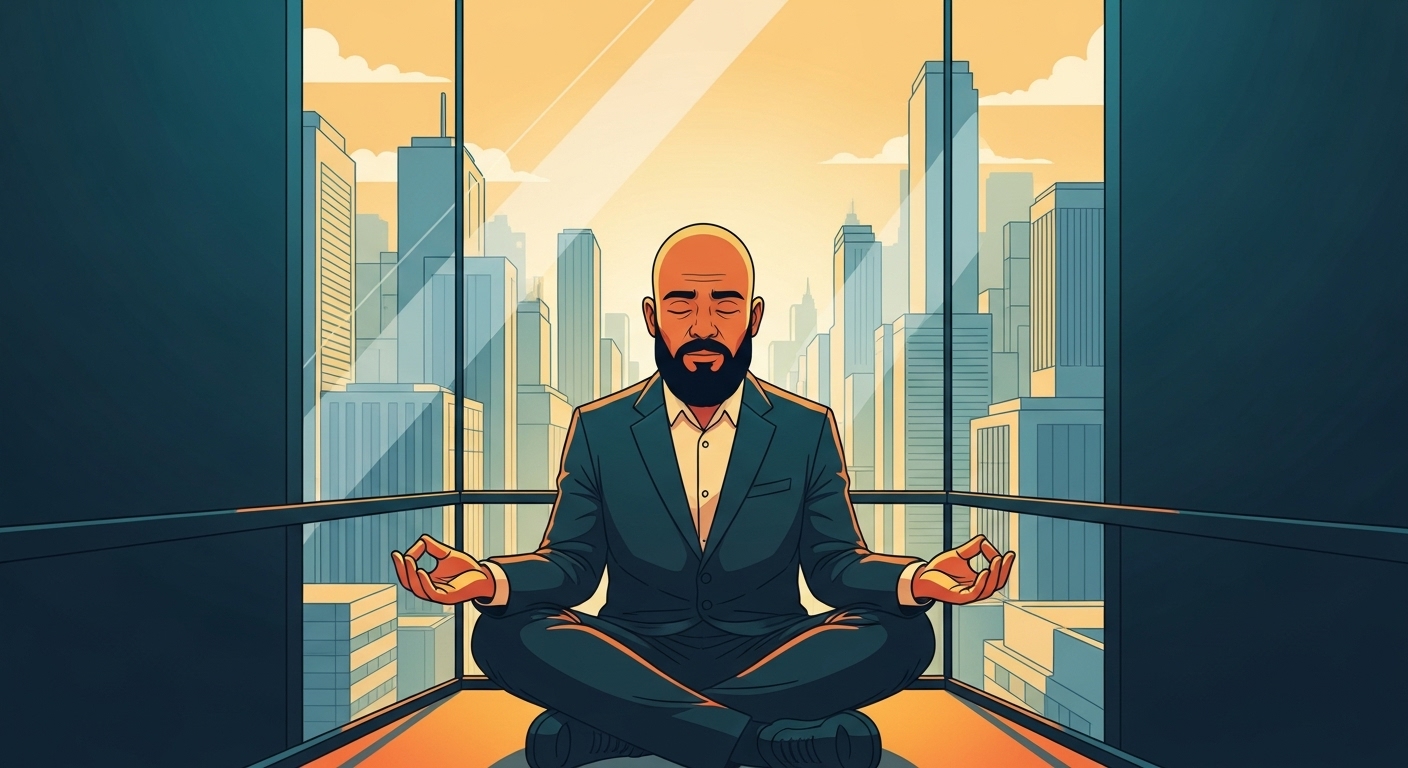
Traditional meditation is designed for people who don’t have your life. Sit quietly for 20 minutes? My calendar is scheduled in 15-minute increments. I once had a meeting to discuss when to schedule a meeting. That’s the life we’re working with.
So when people say “just meditate,” I hear “just find a spare room in a building with no vacancies.”
I tried the long-form approach for years. Downloaded the apps. Bought the cushion. Set my alarm for 5:30 AM. You know what happened at 5:30 AM? I hit snooze and felt guilty about it until lunch.
Then I stopped trying to find 20 minutes. I started working with 5. Sometimes less. And the weird thing is, it worked better.
Why 5 Minutes Is Enough
There’s a persistent myth that short meditation doesn’t count. That you need to reach some threshold before anything useful happens in your brain. This isn’t true.
Researchers at the University of Waterloo found that even brief mindfulness sessions improved focus and reduced mind-wandering. But forget the studies for a second. Here’s what I know from doing this every day for three years: five minutes of actual presence beats thirty minutes of sitting there mentally rewriting an email to your boss.
The real secret? Your minimum effective dose can be even smaller. I wrote about this in my sacred intervals practice — sometimes three conscious breaths is the whole session. That’s maybe 20 seconds. The point isn’t duration. The point is showing up, even briefly, and meaning it.
Five minutes is generous. Five minutes is plenty. Do it daily and after a few weeks you’ll notice you respond to stress differently. Not enlightenment. Just a slightly longer pause before you fire off that reply-all. I’ve seen it in my own life, and people I’ve shared these practices with on the podcast say the same thing.
My advice: pick one of the four practices below. Just one. Try it today.
The Elevator Practice
This is an eyes-open practice. Nobody will know you’re doing it. That matters, because most of us aren’t going to close our eyes and hum in front of coworkers.
The setup: any transition moment works. The 90 seconds between when the elevator doors close and when they open on your floor. The wait for your coffee order. A red light on your drive home.
- Notice your feet on the ground. Feel the weight of your body pressing down through your shoes. This takes about two seconds and it yanks your attention out of your head and into your body.
- Take three slow breaths through your nose. Don’t force anything dramatic. Just breathe slightly slower than normal. Count each exhale: one, two, three.
- Soften your jaw. You’re clenching it right now. Everyone is. Let it drop a few millimeters. Let your tongue fall away from the roof of your mouth.
That’s the whole practice. Feet, breath, jaw. You can do it waiting for a crosswalk signal. I do it between Zoom calls — the 45 seconds while the next meeting loads is enough. I’ve done it at my kid’s soccer game, standing on the sideline, looking like I’m just watching the field.
The trick isn’t finding special moments. It’s realizing how many transition moments you already have and using one or two of them.
The Walking Reset
I picked this up during my subway monastery experiments, but you don’t need a subway. A hallway works. The walk from your car to your front door. A single lap around the block on your lunch break.
- Walk slightly slower than your normal pace. Not comically slow. Just 10-15% slower, like you’re early instead of late for once.
- Feel each foot land. Heel, then ball, then toes. Left. Right. You’ve done this a hundred thousand times without noticing. Notice it now.
- Match your breath to your steps. Inhale for three or four steps. Exhale for three or four steps. Find your own rhythm here. Don’t overthink the count.
- When your mind wanders, come back to your feet. It will wander. That’s fine. That’s actually the exercise. The coming-back part is where the muscle gets built.
I do this walking from the parking garage to my office. Takes about four minutes. By the time I reach the lobby, the mental noise from the drive has settled. I’m actually arriving at work instead of dragging the highway in with me.
A full five-minute walking reset at lunch is even better. Not a power walk. Not exercise. Just slow, deliberate movement with attention on your body instead of your phone.
The Desk Pause
This is my most-used practice because I spend an absurd number of hours at a desk. It’s a seated body scan, stripped down to the essentials. You can do it with your hands on the keyboard and your eyes on the screen. Completely invisible.
- Start at the top of your head. Notice any tension there. The muscles across your forehead, behind your eyes. Don’t try to fix anything. Just notice.
- Move your attention down through your body like a slow elevator. Forehead. Jaw. Neck. Shoulders. The shoulders are always the worst. Mine creep up toward my ears like they’re trying to escape. Then chest, belly, hands, thighs, feet.
- Wherever you find tension, exhale into it. One breath aimed at one tight spot. Then move on.
The whole scan takes about three minutes if you don’t rush. I do it at 2 PM most days, which is when I hit that post-lunch fog where everything feels slightly impossible. After the scan, I feel like I’ve put my brain through a rinse cycle.
You can also do this in meetings. I’ve done full body scans during quarterly reviews. Nobody noticed. I was a better listener afterward because I wasn’t carrying all that physical tension into my attention.
The Evening Wind-Down
This is the only practice on this list that asks you to close your eyes and sit somewhere quiet. Five minutes before bed. That’s it.
I resisted this one for a long time because evenings felt like my last scrap of personal time and I didn’t want to spend any of it meditating. Turns out five minutes of deliberate wind-down saved me 30-40 minutes of lying in bed with my brain running through tomorrow’s to-do list.
- Sit on the edge of your bed. Close your eyes. Take five deep breaths. Slow ones. In through the nose, out through the mouth. Let each exhale be audible. A sigh, almost.
- Mentally replay your day in fast-forward. Not analyzing, not judging. Just watching it go by like a time-lapse video. Let each scene appear and dissolve.
- Say one sentence to yourself: “That day is complete.” Then let it go. Open your eyes. Get into bed.
Some nights this takes three minutes. Some nights it takes seven. The point isn’t the clock. The point is giving your nervous system a clear signal: the workday is over and right now the only job is rest.
My sleep improved within the first week of doing this. Not dramatically. But I stopped lying there at 11:45 PM suddenly remembering that I forgot to reply to an email from Tuesday.
Pick One
You don’t need all four of these. You need one. Maybe the elevator practice fits your day. Maybe the desk pause is more your speed. It doesn’t matter which one you choose.
What matters is that you actually do it. Today. Close this tab and try one before you forget. Or at least the next time you find yourself waiting for an elevator.
Five minutes. One practice. See what happens. If it’s useful, do it again tomorrow. If it’s not, try a different one. That’s the whole system. You don’t need an app or a cushion or to feel guilty about the 20-minute session you keep skipping.
You already have the time. You’re just not using it yet.
5-Minute Meditation Stories
If you like the idea of short practices but want something to follow rather than instructions to execute, meditation stories might be your thing. A five-minute story gives your brain a narrative to track — somebody’s experience, a specific scene — and the meditation happens while you’re listening. Less effort than technique. Same result.
I’ve put together a collection of short meditation stories designed for packed schedules. Each one is under five minutes and fits into the same gaps as the practices above — commutes, coffee waits, the space between meetings. And the full meditation stories collection has longer options too, organized by what you need: sleep, anxiety, stress, beginner-friendly.
About Marcus Wu
Urban Spiritual Teacher & Mindfulness Practitioner
Marcus Wu is an urban spiritual teacher, former tech executive, and creator of Sacred Intervals. He has been teaching meditation for over 5 years, mostly to people who work in fast-paced, high-pressure jobs and need practical ways to stay grounded.
You might also enjoy
Short Meditation Stories You Can Listen to in 5 Minutes
You don't need 30 minutes. You need 5. These short meditation stories fit between meetings, on the subway, or while your coffee brews. Practical micro-stories for packed schedules.
Micro Meditation for Busy Professionals: The Sacred Intervals Technique
Learn sacred intervals — a micro meditation technique that turns everyday moments into mindfulness practice. Just three conscious breaths, no cushion or quiet room needed.
Meditation Stories for Work Stress: The Corporate Monk's Guide
Marcus Wu had a panic attack during a board presentation. He didn't quit his job — he changed how he showed up. These meditation stories are for people who can't 'just relax.'