I Can't Meditate: What to Do When Your Mind Won't Shut Up
Think you can't meditate because your brain won't stop? A former tech executive explains why overthinking isn't the problem — and what to do instead of fighting your thoughts.
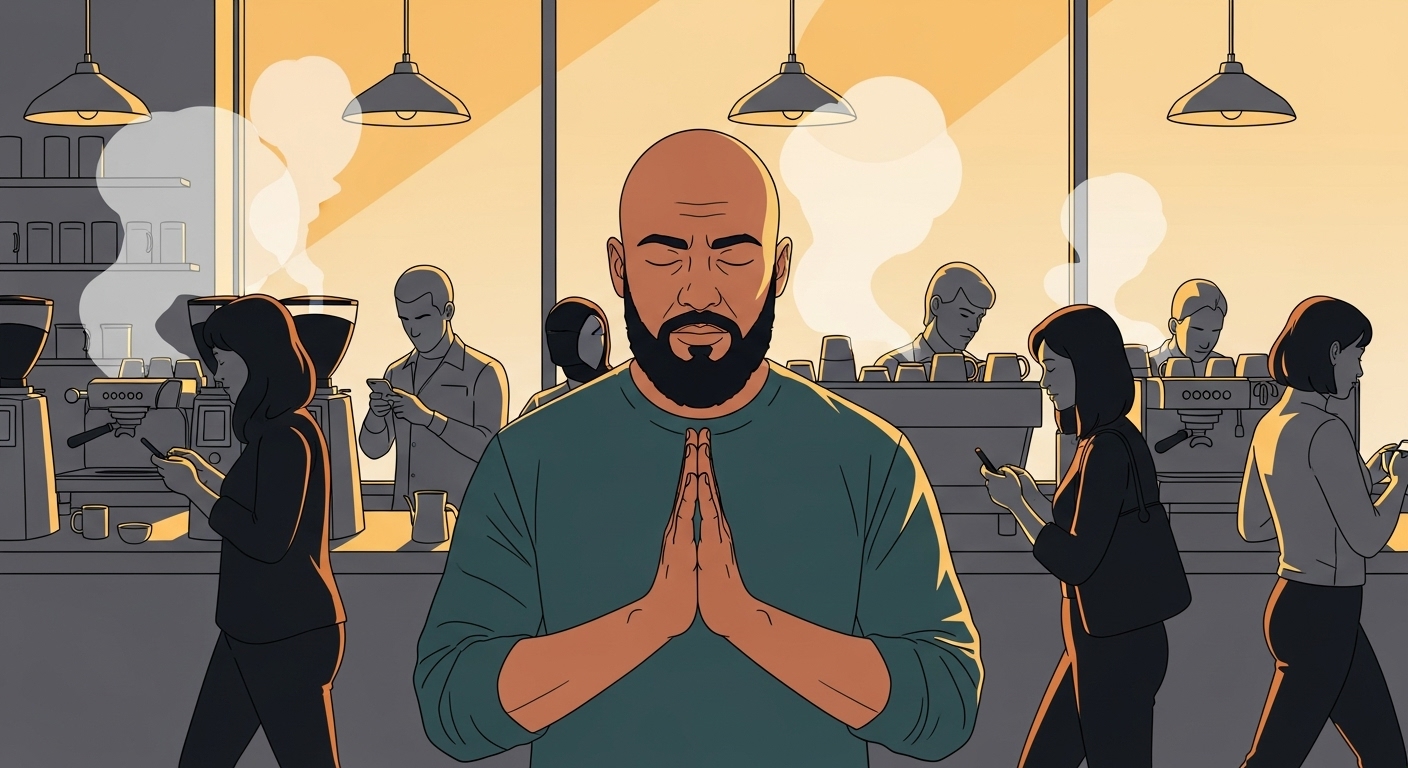
My first real attempt at meditation lasted eleven seconds.
I know because I was timing it on my Apple Watch. Which tells you everything you need to know about the kind of person I was. I’d read that meditation could improve executive function by 14%, so I blocked out “mindfulness training” on my calendar between my 7:15 standup and my 7:45 pipeline review.
I sat on the floor of my office. Closed my eyes. Took a breath.
And my brain said: Did you reply to the Sequoia thread? The Singapore deck has a typo on slide nine. You need to call your mother. Why is the HVAC so loud? Is that a fire truck? What’s the engineering burn rate this sprint? You should really stretch more. Are you doing this wrong? You’re doing this wrong.
Eleven seconds. I opened my eyes, muttered something unprintable, and went back to Slack.
That was two years ago. I tried again the next week. Failed. Tried a guided app. Failed louder, somehow. Tried a weekend retreat in Woodstock where a very patient woman in linen pants told me to “observe my thoughts like clouds.” My thoughts weren’t clouds. They were a packed Jira board with overdue tickets.
I was convinced meditation didn’t work for people like me. People whose brains run hot. People who think in spreadsheets and dependencies and worst-case scenarios. I told myself: meditation is for calm people who want to get calmer. I am not that person.
I was spectacularly wrong.
Your Brain Isn’t Broken
Here’s what nobody told me during those early failures, and what I wish someone had just said plainly: meditation for overthinking doesn’t mean you stop overthinking. That’s not the goal. It was never the goal.
The point of meditation is not an empty mind. Full stop.
I spent months believing I couldn’t meditate because my thoughts kept coming. That’s like believing you can’t go to the gym because your muscles get tired. The thoughts ARE the exercise. Every time your brain wanders and you notice it wandered, that noticing is the rep. That’s the whole thing.
When someone says meditation doesn’t work for them, what they usually mean is they sat down, their brain went wild, and they assumed they were failing. I did this for a year.
But a busy mind doesn’t disqualify you from meditation. It qualifies you. If your brain were already quiet, you wouldn’t need the practice.
My therapist put it another way that finally clicked: “Marcus, you don’t go to the dentist because your teeth are perfect.”
The Boardroom Discovery
Sitting still never worked for me. I’ll just say it. I tried the cushion, the quiet room, the closed-eye stillness. Every time, my body did that thing it always does - the fidgeting, the jaw clenching, the low-grade feeling that I should be doing something more productive. The same wiring that made me good at running product teams made me awful at sitting still.
The shift happened on a Tuesday in October when I missed my morning train at Penn Station. I had nine minutes to kill. No bench. No Wi-Fi. Just me and a concrete platform and about two hundred strangers.
Instead of pulling out my phone, I walked. Slowly. One end of the platform to the other. I paid attention to my feet on the grimy tile. I noticed the sound of the track announcement echoing off the ceiling. I felt the strange warmth of underground air in fall.
Something loosened.
It wasn’t dramatic. No white light. No epiphany. Just a small gap between me and my thoughts, like the space between train cars. I could see my usual morning anxiety - the meetings, the emails, the performance review I was dreading - but it was one track over. Close. Audible. Not gone. But not running me.
That nine minutes taught me more than six months of trying to sit still with my eyes closed. I learned that my body needed to be involved. Movement gave my restlessness somewhere to go. My legs were busy, so my brain could ease off the throttle for once.
Three Things That Actually Helped
After that platform experience, I started experimenting. Kept what worked, dropped what didn’t. No loyalty to any method. Here’s what stuck.
1. Label your thoughts like agenda items.
This sounds ridiculous. It works. When a thought pops up during practice, I give it a category. “Planning.” “Worry.” “Memory.” “Fantasy.” I treat each one like an item that showed up to a meeting uninvited. I acknowledge it. “Noted, thanks.” Then I return to whatever anchor I’m using, usually my breath or my footsteps.
What labeling does is shift you from participant to note-taker. You’re in the same meeting, hearing the same noise, but you’re the one with the laptop typing “Bob is spiraling again” instead of being Bob. Same room. Completely different job.
2. Sacred intervals instead of long sessions.
I wrote a whole piece about sacred intervals because this practice saved my relationship with meditation. Instead of 20 or 30 minutes of sitting, I take three conscious breaths at transition points throughout my day. Before I open my laptop. After I end a call. When the elevator doors close. When I step outside for lunch.
Each one lasts maybe fifteen seconds. I do dozens of them. It adds up to more total presence than any formal sitting session ever gave me, because I actually do it. Consistency beats intensity. I learned that managing engineering teams, and it turns out brains work the same way.
3. Walking meditation during the commute.
My subway monastery experience changed how I think about when and where practice can happen. But even before that breakthrough, I’d started walking part of my commute with intentional attention. No headphones. No phone in hand. Just walking and noticing.
You notice a lot when you’re not staring at your phone. Steam from a grate. The specific shade of orange a traffic light makes on wet asphalt. A stranger laughing into their phone. Somebody’s kid screaming about a pigeon. None of this is peaceful. All of it is real. And real turns out to be enough.
What If Meditation Really Isn’t for You?
I want to be honest here because I think the wellness world is allergic to honesty.
Meditation helped me. It genuinely, measurably improved my sleep, my reactivity in meetings, and my ability to be present with my kids instead of mentally drafting emails while pushing them on the swings. But it’s a tool. One tool. Not a universal fix.
If you’ve tried multiple approaches over real stretches of time and you feel nothing, that’s okay. You’re not broken. Maybe your thing is running. Maybe it’s making stuff with your hands. I know a VP of Engineering who swears her version of meditation is restoring old furniture. The specific practice doesn’t matter. What matters is whether you can find moments where your thoughts loosen their grip, even for a few seconds.
What I’d push back on is quitting after one bad experience. Or two. Or ten. I had months of bad experiences before something shifted. The version of meditation that finally worked for me looked nothing like what I expected. It happened on train platforms, during walks to the office, in the fifteen seconds before a Zoom call.
If you’re curious about building a practice that fits an actual busy life, our guide is a decent starting point. No linen pants required.
If you want to start small, I put together four practices that take five minutes or less.
I still can’t sit still for 30 minutes with an empty mind. I probably never will. But yesterday I walked from Penn Station to the office without once reaching for my phone. And when I sat down and opened my inbox to 43 unread messages, I took three breaths before clicking the first one. My brain was already drafting responses by breath two, because that’s what it does. But I noticed.
That’s the whole practice. Honestly, most days, it’s enough.
About Marcus Wu
Urban Spiritual Teacher & Mindfulness Practitioner
Marcus Wu is an urban spiritual teacher, former tech executive, and creator of Sacred Intervals. He has been teaching meditation for over 5 years, mostly to people who work in fast-paced, high-pressure jobs and need practical ways to stay grounded.
You might also enjoy
Daily Meditation Practice: How to Build Mindfulness into Your Existing Routine
You don't need to add meditation to your schedule — you need to bring mindfulness into the day you already have. A practical guide to daily meditation without extra time.
Meditation Stories for Work Stress: The Corporate Monk's Guide
Marcus Wu had a panic attack during a board presentation. He didn't quit his job — he changed how he showed up. These meditation stories are for people who can't 'just relax.'
Urban Meditation Stories: Finding Stillness in the City
The city is not the enemy of meditation. It's the dojo. Marcus Wu's urban meditation stories turn subways, offices, and crowded streets into places for practice.