Meditation Stories for Work Stress: The Corporate Monk's Guide
Marcus Wu had a panic attack during a board presentation. He didn't quit his job — he changed how he showed up. These meditation stories are for people who can't 'just relax.'
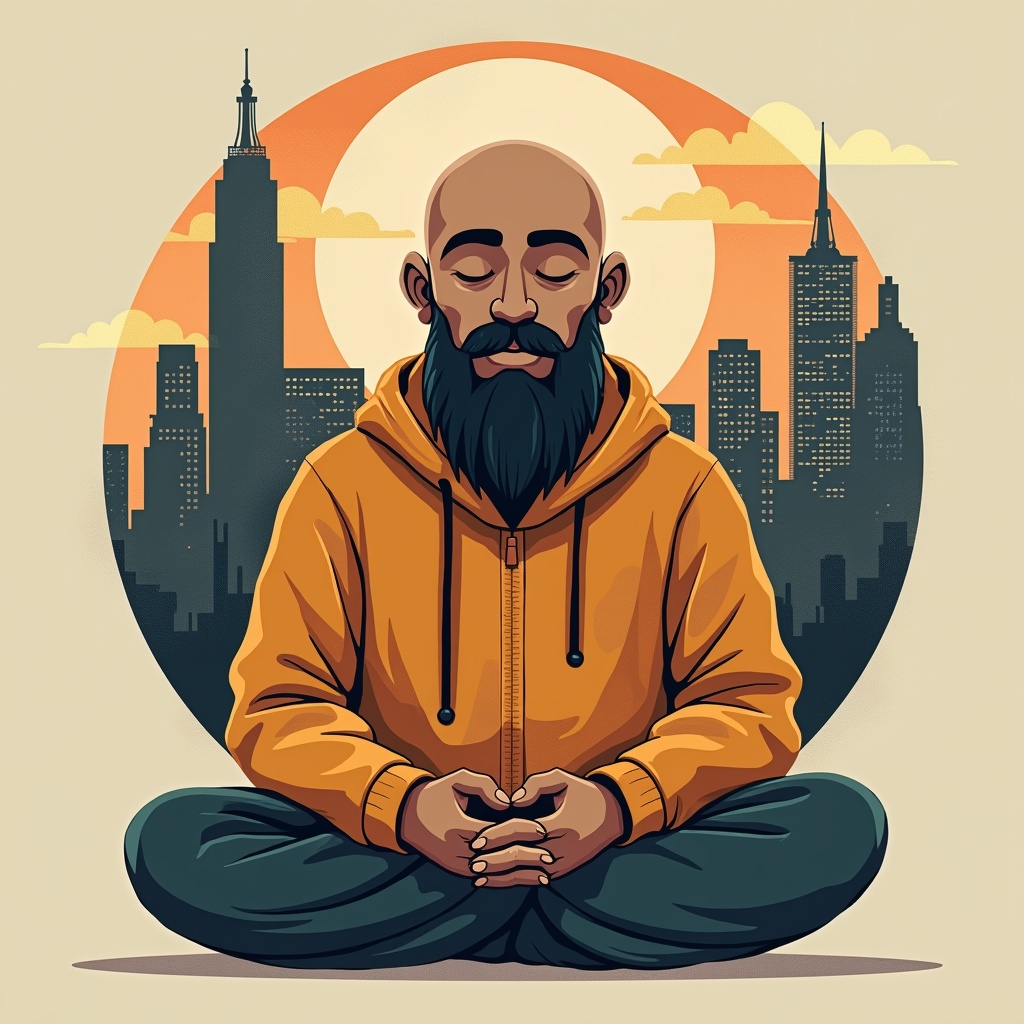
I was standing at the head of a conference table, mid-sentence, when my heart decided to audition for a drum solo. My vision narrowed to a pinhole. The room tilted. Twelve faces stared up at me — people who reported to me, people I was supposed to lead — and all I could think was: I’m dying. Right here, between slide 14 and slide 15 of a Q3 revenue deck, I’m going to drop dead.
I didn’t die. I gripped the table, mumbled something about needing water, and white-knuckled my way through the remaining slides. Afterward, I sat in my car in the parking garage for forty-five minutes. Hands shaking. Shirt soaked.
That was two years ago. I didn’t quit my job. I didn’t fly to Bali. I didn’t “find myself” on a silent retreat. I went back to work the next Monday and started figuring out how to survive inside the machine without the machine grinding me down.
What I found was stories. Not advice. Not breathing exercises printed on a laminated card from HR. Stories — about people like me who cracked under the fluorescent lights and figured out how to put themselves back together without walking away from everything they’d built.
This is what I know now. And if you’re reading this in a bathroom stall between meetings, or on your phone at 11 PM because your brain won’t stop running tomorrow’s agenda — these are for you.
Why Work Stress Needs Stories, Not Instructions
Somebody once told me to take three deep breaths before a difficult conversation. Great advice. Completely useless when your CFO is staring at you across a table, waiting for an answer about why your department is over budget by 15%.
The problem with most meditation advice is that it assumes you can press pause on your life. Close your eyes. Find a quiet room. Light a candle. The people writing this advice have apparently never worked in an open-plan office where someone is always microwaving fish and your Slack notifications sound like a slot machine paying out.
Generic instructions don’t stick because they don’t feel real. “Breathe deeply.” Sure. “Scan your body for tension.” Okay. But none of that addresses the specific, soul-crushing texture of sitting in a meeting where someone is taking credit for your work and you’re supposed to smile about it.
Stories do something different. When you hear about someone else’s breakdown — the specifics of it, the conference room and the shaking hands and the parking garage afterward — something in your nervous system unclenches. You think: that’s me. I’m not broken. This is a thing that happens to people.
That recognition is worth more than a hundred breathing exercises.
I started telling my stories on the Waylight Stories podcast because nobody in a corner office is going to sit cross-legged on the floor and chant. But they might listen to a ten-minute story on the subway home. They might hear a character who sounds like them — same pressures, same impossible calendar, same 2 AM ceiling-staring — and think, okay, maybe there’s a way through this that doesn’t involve torching my career.
Stories don’t ask you to escape your life. They show up where you already are.
Marcus’s Workplace Meditation Stories
I’ve been building a library of these. Each one comes from something real — a moment in my own career, or from someone I’ve talked to who recognized the same patterns. Here’s where to start.
Wake-Up Call: The Panic Attack Origin Story
This is the board meeting. The full version. The part I didn’t tell anyone for six months — how I went home that night and sat on the kitchen floor and genuinely didn’t know if I could go back. How I went back anyway. How going back was both the hardest and most important thing I’ve done. If you’ve ever had a moment where your body overrode your brain and shut you down mid-performance, start here. You’re not weak. Your nervous system was trying to save your life.
Sacred Intervals: Micro-Meditations Hidden in the Workday
This is where the practice lives. Not on a cushion. Not in a studio. In the twelve seconds between hanging up one call and dialing the next. In the walk from your desk to the bathroom. In the thirty seconds you spend watching the coffee drip into your mug. Sacred Intervals is about finding meditation inside the day you already have, without adding a single thing to your calendar. It’s the practice I use most. Nobody around me knows I’m doing it.
Subway Monastery: The Commute as Practice (Part 1, Part 2, Part 3)
Three episodes about turning the worst part of your day into the most useful part. The subway is loud, crowded, unpredictable — which makes it perfect. If you can find stillness wedged between a guy with a backpack and a woman arguing on speakerphone, you can find stillness anywhere. These episodes walk through how to use noise as an anchor instead of an obstacle, how to let go of the workday during transit, and how to arrive home actually present instead of dragging the office through your front door.
Finding the Mountain in the Madness
This one is about the long game. Not just surviving work, but finding something inside it that actually feeds you. The chaos isn’t blocking your path. It is the path. I wrote this during a stretch when I’d stopped white-knuckling through each day and started treating the practice as part of the work itself. It’s the closest thing I have to a philosophy. Mostly, it’s about what I actually do, not what I think.
5 Work Stress Meditation Stories You Can Use Right Now
These aren’t guided meditations. They’re scenes. Scenarios. Little movies you can play in your head when you’re in the middle of it. Each one takes less than two minutes.
1. Before the Meeting
You’re standing outside the conference room. Through the glass, you can see people settling into chairs, opening laptops, pouring water from the pitcher nobody ever refills. In ninety seconds, you’ll walk in and need to be sharp.
Here’s the story: you’re not going into battle. You’re walking into a room full of people who are all managing their own private stress. Every person at that table has a version of the parking garage moment. You don’t need to win the room. You need to show up in it.
Stand there for a beat. Feel your feet on the carpet. Take one breath that’s slightly deeper than normal — not theatrical, just intentional. Drop your shoulders an inch. Now walk in.
Practice: Grounding. Getting into the room instead of rehearsing what might happen in it. When to use it: Before any meeting where your stomach tightens.
2. The Email Avalanche
It’s 9:15 AM. You’ve been at your desk for thirty minutes. You have 47 unread emails. Three are marked urgent. One is from someone two levels above you. Your instinct is to triage at maximum speed — answer the scary one first, then put out the next fire, then the next.
Here’s the story: imagine a firefighter walking into a burning building. They don’t run. They walk. They assess. They breathe through the mask, slow and steady, because panic kills faster than fire.
You’re not going to answer anything for sixty seconds. Just look at the list. Let it exist. It was there before you opened your laptop and it would be there whether you panicked or not. Now pick one. Not the most urgent — just the one you can handle cleanly. Do that one. Then the next.
Practice: Responding instead of reacting. Breaking the urgency trance. When to use it: Any time your inbox or task list triggers that chest-tightening spiral.
3. The Difficult Conversation
You have to tell someone something they don’t want to hear. A performance review. A project getting killed. A budget cut. You’ve been rehearsing the conversation in your head for two days, running different versions, imagining their face.
Here’s the story: you’ve done hard things before. Not in the abstract — specifically. You’ve had conversations that felt impossible and survived them. The other person survived them too. Right now, you’re pre-living a moment that hasn’t happened yet, and your body is reacting to the imagined version like it’s real.
Three breaths. On the first, acknowledge that this is hard. Don’t pretend it’s fine. On the second, remind yourself that honesty, delivered with respect, is the kindest thing you can offer. On the third, let go of controlling how they’ll react. That part was never yours to manage.
Practice: Separating preparation from catastrophizing. When to use it: Before any conversation you’ve been dreading.
4. The Commute Home
The train doors open. You step on. Behind you, the platform — the building, the desk, the day. In front of you, a seat by the window.
Here’s the story: the train is a threshold. When the doors close, the day is over. Not because you’ve finished everything — you haven’t, you never will — but because this metal box is carrying you from one version of yourself to another. Work-you did their best today. Home-you gets to be someone else.
Watch the station pull away. Let the day replay in fast-forward — the meetings, the emails, the one conversation that’s still bugging you. Watch it all slide past the window like scenery. Then let the window go dark as you enter the tunnel. The day stays on the platform. You don’t have to carry it home.
Practice: Letting the day end on purpose. Switching roles consciously. When to use it: On any commute. Works in a car too — the office disappearing in your rearview mirror is the same threshold.
5. Sunday Evening
It’s 7 PM on a Sunday. The weekend is bleeding out. Tomorrow is Monday. You can already feel it in your chest — the low-grade dread, the mental preview of your calendar, the sense that your free hours are on a timer.
Here’s the story: Monday exists, but it doesn’t exist yet. Right now, it’s Sunday evening, and you’re here. The anticipation of stress is not the same as stress. Your body doesn’t know the difference, but you do.
Picture Monday morning. Not the worst version — just the real one. You’ll get up, get dressed, commute, sit down, start working. You’ve done it a thousand times. It’s not exciting. It’s also not the catastrophe your nervous system is rehearsing.
Now come back to the couch, the book, the last few hours of your weekend. Let Monday be a stranger you’ll meet tomorrow. Tonight, you don’t owe it anything.
Practice: Telling the difference between anticipatory stress and the real thing. When to use it: Any time you’re pre-living a future you can’t control yet.
Building a Workday Meditation Practice
Here’s my actual schedule. Not the aspirational version — the real one.
Morning commute (15 minutes): I listen to a story on the way in. Sometimes one of the Waylight episodes, sometimes just a narrative I run in my own head. The goal is to arrive at work having already made one conscious choice about my state of mind, instead of sleepwalking from my front door to my desk.
Mid-morning (20 seconds): Sacred interval. Between calls or meetings, I do the elevator practice — feet, breath, jaw. Nobody sees it. It takes less time than checking my phone.
After lunch (3 minutes): Desk pause. A quick body scan while staring at my screen. I look like I’m reading an email. I’m actually checking in with my shoulders, which have migrated to my ears again.
Mid-afternoon (20 seconds): Another sacred interval. The day’s heaviest hours are between 2 and 4 PM. One conscious breath during that window costs me nothing and resets something I can’t fully explain.
Evening commute (15 minutes): Processing the day. I run the commute-home story — the threshold, the doors closing, the day staying behind. By the time I park or step off the train, I’ve made a deliberate shift.
No meditation cushion. No app sending me guilt-trip notifications. No one at work knows I do any of this. The whole practice hides inside a normal day. From the outside, it looks like nothing. From the inside, it’s the reason I can still do this job without losing my mind.
Start Here
If you’re reading this because work is eating you alive, start with the Wake-Up Call episode. Not because it’s the best — because it’s the most honest. It’s the story of the worst day of my professional life and what I built from the wreckage.
Then browse the meditation stories library. Every episode is organized by theme, so you can find what fits whatever is eating at you.
If you want to know more about who’s writing this and why, my page has the longer version.
And if five minutes is all you’ve got — honestly, that might be all you need. I put together a breakdown of four practices that fit into the cracks of an overscheduled day. Pick one. Try it before your next meeting. See what happens.
You don’t have to burn it all down to feel better. You just have to pay attention differently. I’m proof of that. Same job. Same city. Same calendar packed to the margins. Different person sitting in the chair.
About Marcus Wu
Urban Spiritual Teacher & Mindfulness Practitioner
Marcus Wu is an urban spiritual teacher, former tech executive, and creator of Sacred Intervals. He has been teaching meditation for over 5 years, mostly to people who work in fast-paced, high-pressure jobs and need practical ways to stay grounded.
You might also enjoy
Urban Meditation Stories: Finding Stillness in the City
The city is not the enemy of meditation. It's the dojo. Marcus Wu's urban meditation stories turn subways, offices, and crowded streets into places for practice.
Short Meditation Stories You Can Listen to in 5 Minutes
You don't need 30 minutes. You need 5. These short meditation stories fit between meetings, on the subway, or while your coffee brews. Practical micro-stories for packed schedules.
5-Minute Meditation: Four Quick Practices for People with No Time
No time to meditate? These four 5-minute meditation techniques fit into your commute, lunch break, or the gap between meetings. Practical mindfulness for packed schedules.