Urban Meditation Stories: Finding Stillness in the City
The city is not the enemy of meditation. It's the dojo. Marcus Wu's urban meditation stories turn subways, offices, and crowded streets into places for practice.
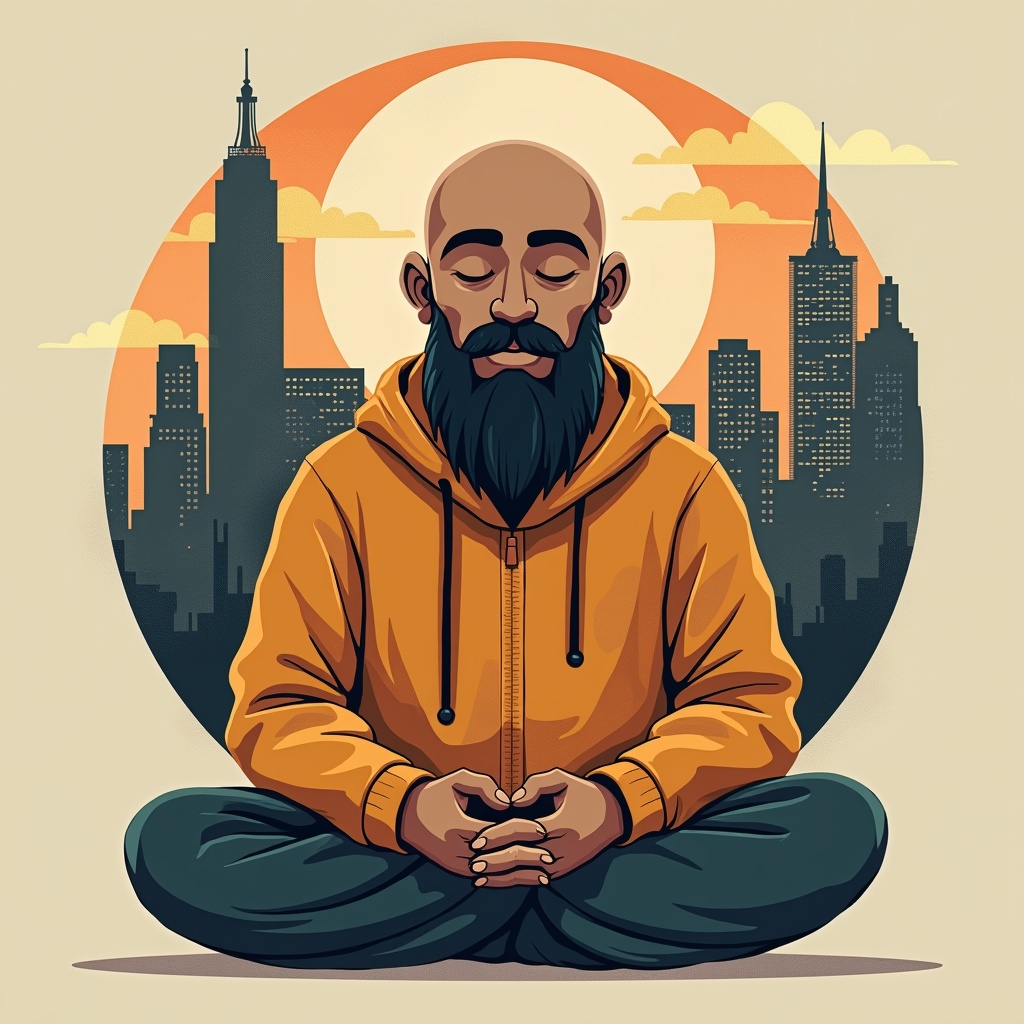
The city is not the enemy of meditation. It’s the dojo.
I figured this out on a stalled N train somewhere under Midtown. Forty strangers, no cell service, recycled air that tasted like somebody’s leftover pad thai. The guy next to me was white-knuckling his briefcase like it owed him money. A woman three seats down was doing that slow, measured exhale people do when they’re trying not to scream.
And me? I was meditating. Not performing it. Not pretending to be somewhere else. Actually sitting with the noise, the heat, the collective irritation of a subway car full of people who had places to be.
That was the moment I stopped looking for the right conditions and started working with the ones I had.
Here’s the thing nobody talks about: roughly 80% of people on this planet live in cities. But most meditation content is built for someone sitting cross-legged in a forest clearing at dawn. Birds chirping. Stream trickling. Zero notifications. That’s beautiful. It’s also useless if your morning involves a packed bus, a gas station coffee, and a phone that won’t stop buzzing before 8 AM.
I used to think I was doing it wrong. That the city was the obstacle and I just needed to get away from it. More retreats. Quieter rooms. Earlier alarms. I tried all of it. None of it stuck, because I kept coming back to the same life — the trains, the deadlines, the open-plan office that sounded like a casino floor.
Your meditation is here. In the noise. In the crowds. In the rush. You just haven’t recognized it yet.
The Myth of the Quiet Place
Every meditation guide I read in my twenties had the same opening move: find a quiet, comfortable space. Close the door. Minimize distractions.
Great advice if you live alone in a farmhouse. Less great if you share a studio apartment above a bar that plays live jazz until 1 AM. Even less great if you have kids, roommates, a neighbor who’s learning the trumpet, or all three.
The quiet-place requirement isn’t just impractical. It’s exclusionary. It tells people in small apartments, loud neighborhoods, and chaotic households that meditation isn’t for them. That they need to buy their way into silence before they can start. Get the noise-canceling headphones. Book the retreat. Find the room.
I spent years believing this. I rented office space I couldn’t afford just to have somewhere quiet to sit. I drove to parks at 5 AM. I tried meditating in my car in the parking garage, which, let me tell you, is its own kind of sad. All because I thought the noise was the problem.
The noise was never the problem. My resistance to it was.
When I finally stopped fighting the city and started practicing inside it, things got simpler. The honking horns became just sound. The crowd on the sidewalk became just movement. The jackhammer outside my window became just vibration — unpleasant vibration, sure, but not the enemy of awareness.
The city isn’t blocking your meditation. It’s providing the advanced curriculum. Sitting in silence is the beginner course. Sitting with noise, real noise, the gritty unpredictable kind, that’s where you actually learn something.
Marcus’s Urban Meditation Stories
I’ve spent the last few years turning my city life into a meditation lab. Not because I’m disciplined. Because I had no other option. The panic attack during a board presentation made that clear. I either learned to practice where I actually lived or I didn’t practice at all.
Here’s what came out of that.
The Subway Monastery — This is a three-part series about finding practice underground. Part 1 is the origin story: the broken-down N train, the forty furious commuters, and the moment I realized my subway car was a monastery. Part 2 goes deeper into the actual technique — how to use the rhythm of the train, the press of the crowd, and the specific quality of underground silence to anchor your attention. Part 3 is about making it a daily practice, not a one-time experiment. Commuters have told me these episodes changed how they experience transit. Less dread. More presence. Same train.
Sacred Intervals. These are micro-meditations designed for the gaps in your day. The Sacred Intervals practice is built around the idea that you already have dozens of usable moments, and you’re just scrolling through them. Three breaths at a red light. A body scan while your coffee brews. Ten seconds of actual attention between meetings. None of them look like meditation. All of them work.
The Wake-Up Call — This is the story of my corporate burnout. The panic attack during the Q3 presentation. The corner office that felt like a cage. The six screens I was monitoring while my own nervous system crashed. I didn’t leave the city after that. I didn’t quit and open a yoga studio. I stayed right here, in the noise, and learned to practice with it instead of against it. What I learned in that boardroom ended up shaping most of what I teach now.
5 City Moments That Are Already Meditation
You don’t need to add meditation to your day. You need to notice it’s already happening.
The Elevator Ride. Doors close. You’re alone, or standing shoulder-to-shoulder with strangers who are all staring at the ceiling. Fourteen floors. Maybe twenty seconds. Nobody talks in elevators. Use that. Feel your feet on the floor. Feel the slight pull of gravity as the car rises. One slow exhale before the doors open and the hallway swallows you again. That’s a vertical sanctuary between the lobby and the grind. You ride it every day without noticing. What it practices: transition awareness. The ability to arrive somewhere instead of just showing up.
The Traffic Jam. You’re not going anywhere. The highway has made that decision for you. Your hands are on the wheel, the brake lights ahead are a wall of red, and your schedule just became fiction. Right now, you are sitting still in a metal box with climate control and a decent sound system. The forced stillness is maddening — unless you use it. Loosen your grip on the wheel. Drop your shoulders away from your ears. One long exhale. This is the meditation cushion you never asked for. What it practices: surrender. Letting go of the illusion that clenching harder makes things move faster.
The Coffee Queue. Seven people ahead of you. The barista is making something complicated for someone who ordered something complicated. Your hand is already reaching for your phone. Don’t. Just stand there. Feet on the tile. Weight balanced. Eyes soft. Notice the steam, the hiss of the machine, the low murmur of conversation. This is standing meditation in plain sight, and nobody in line has any idea you’re doing it. What it practices: patience. The radical act of not filling a moment with a screen.
The Lunch Break Walk. Five minutes from your desk to wherever you buy food. Most days you spend it on your phone, rehearsing the afternoon’s meetings, half-reading a Slack thread. Today, leave the phone in your pocket. Walk slightly slower than usual. Feel each step land — heel, ball, toes, concrete. Notice the buildings, the sky between them, the way light falls on the sidewalk at midday. Five minutes of deliberate movement in the middle of eight hours of sitting. Your body has been waiting for this all morning. What it practices: embodiment. Remembering you have a body below the neck.
The Late-Night Subway. 11:40 PM. The car is nearly empty. A few night-shift workers, a couple leaning into each other, someone asleep against the window with a backpack clutched to their chest. The daytime roar has faded to a low hum. The train rocks gently, almost tenderly. The fluorescent light makes everything look slightly unreal, like a painting of a city instead of the city itself. This is the city’s quietest monastery, and it runs on a schedule. What it practices: stillness. The kind that the city only offers when most people aren’t looking.
How to Practice Urban Meditation Stories
The episodes on the podcast were designed for exactly one environment: the one you’re already in.
Listen on your commute. That’s not a compromise. That’s the point. The stories are built to work with the noise around you, not against it. The rumble of the train, the hiss of bus brakes, the muffled conversation of the person behind you — all of it becomes part of the experience. You’re not escaping your commute. You’re inhabiting it.
Practice Sacred Intervals between meetings. The two-minute gap while everyone joins the call. The walk to the bathroom. The moment after you close your laptop and before you pick up your phone. These gaps are everywhere. You’ve just been filling them with scrolling.
Try the walking meditation in disguise. Nobody knows you’re meditating. You look like someone walking to a meeting. You’re walking slightly slower, your attention is on your feet instead of your inbox, and you arrive calmer than you left. That’s it. No special posture. No closed eyes. No one will ask you about it because no one can tell.
You don’t need to look like you’re meditating. That’s the whole point. The best urban practice is invisible. It fits inside the life you already have, in the city you already live in, during the commute you’re already taking.
Your City, Your Monastery
Every city is full of places to practice. The noise is half the reason why. The street corner, the open-plan office, the crowded platform at rush hour — those are where you practice. You don’t need to go anywhere else. The conditions are already here, and they’re as good as they need to be.
Start with my episodes on the podcast page. If the urban approach speaks to you, the meditation stories hub has the full collection. You can learn more about how I got here on the Marcus Wu page.
And if you’re still not convinced that five minutes is enough, read this. I wrote it for the version of me that used to think meditation required an hour, a cushion, and conditions that never showed up. Turns out five minutes in a noisy city beats thirty minutes of waiting for silence that never comes.
The city doesn’t owe you silence. You don’t need it. You already have everything you need to practice — a body, a breath, and a city that never stops giving you something to work with.
So work with it.
About Marcus Wu
Urban Spiritual Teacher & Mindfulness Practitioner
Marcus Wu is an urban spiritual teacher, former tech executive, and creator of Sacred Intervals. He has been teaching meditation for over 5 years, mostly to people who work in fast-paced, high-pressure jobs and need practical ways to stay grounded.
You might also enjoy
Meditation Stories for Work Stress: The Corporate Monk's Guide
Marcus Wu had a panic attack during a board presentation. He didn't quit his job — he changed how he showed up. These meditation stories are for people who can't 'just relax.'
Short Meditation Stories You Can Listen to in 5 Minutes
You don't need 30 minutes. You need 5. These short meditation stories fit between meetings, on the subway, or while your coffee brews. Practical micro-stories for packed schedules.
Micro Meditation for Busy Professionals: The Sacred Intervals Technique
Learn sacred intervals — a micro meditation technique that turns everyday moments into mindfulness practice. Just three conscious breaths, no cushion or quiet room needed.